
Building a weekly rhythm
A realistic weekly study rhythm that helps families make revision predictable, repeatable, and easier to begin.
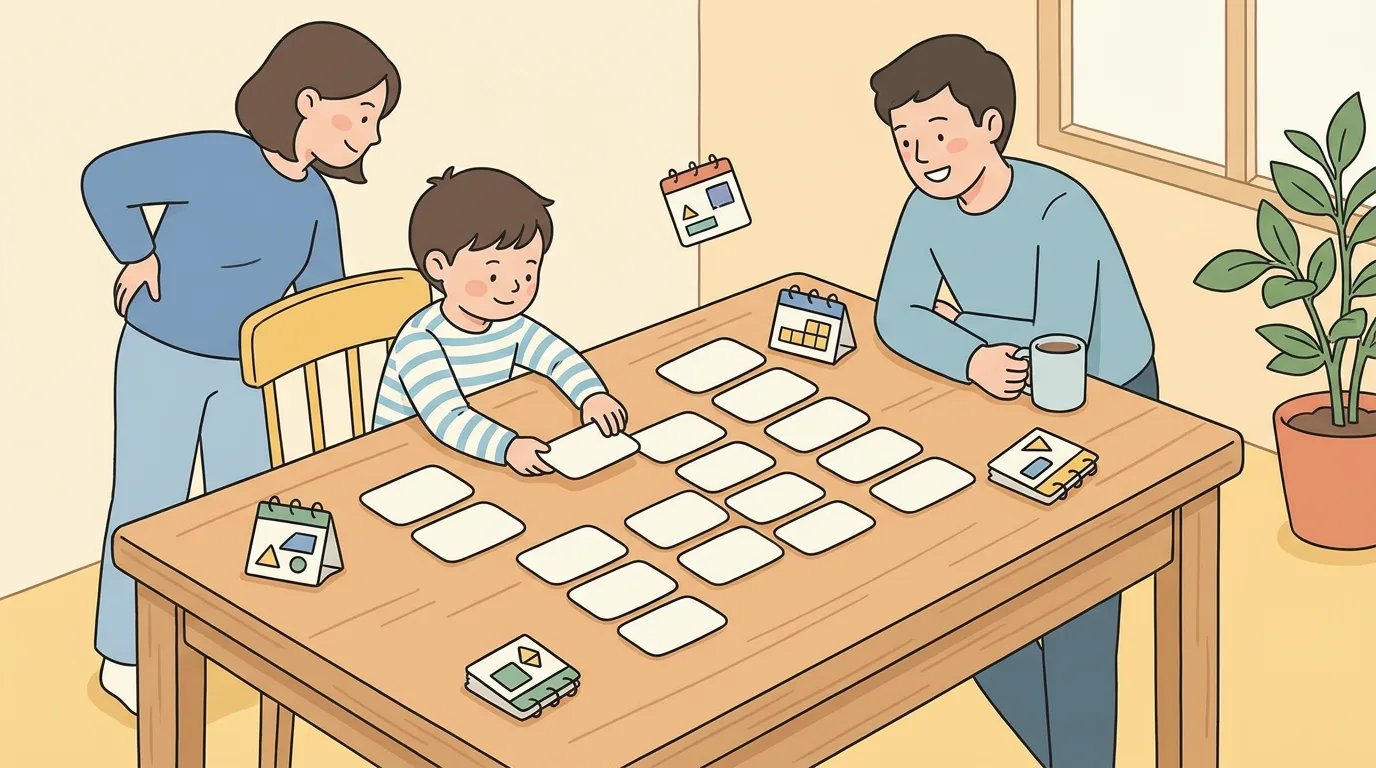
A good weekly rhythm gives study a familiar place in family life. A few small, predictable moments can make revision easier to begin, easier to pause, and easier to return to after an ordinary busy week.
A weekly rhythm works because it removes a decision that families otherwise remake every night: should we study now, for how long, and what counts as enough? When the rhythm is visible, the conversation can shift from pressure to process.
The research base points in a practical direction. Students tend to remember more when practice is spread across separate sessions rather than crammed, and when some of that practice asks them to retrieve knowledge from memory. Reviews of classroom studies find consistent benefits from retrieval practice, while a recent applied review of distributed practice supports re-exposure across separate sessions.
Start smaller than feels necessary
A useful rhythm might be three 25-minute blocks in a week, not a dramatic Sunday night catch-up. The first block can revisit last week's material, the second can practise current work, and the third can repair one small weak spot. Short blocks are easier to protect, easier to restart after a messy week, and less likely to turn into a family argument.
Place the blocks first
Put two or three short study blocks on the calendar before the week starts. Keep them boringly repeatable: same days, same rough time, same place.
Start with recall
Use the first few minutes to recall what your child already knows before opening notes. Closed-book questions are usually more useful than another pass of rereading.
Finish with a next step
End with one tiny next action: which topic needs another look, what question felt uncertain, or what to bring to the next teacher or mossy session.
Make remembering the main event
Many students read notes and mistake familiarity for understanding. A rhythm should make retrieval ordinary: close the book, answer two questions, explain one idea aloud, or write what they remember before checking. It can feel harder than rereading, but that difficulty is the point.

Parents do not need to become subject experts. You can ask, "What do you remember first?", "Where did you get stuck?", and "What would make this easier next time?" If the answer is vague, the next action is small: choose one example, one question, or one page to revisit.
Check in without taking over
Parent involvement is not automatically helpful just because it is intense. Recent homework meta-analysis work suggests the quality of involvement matters, with autonomy-supportive involvement standing out more than control or doing the task for the child. In practice, that means helping set the structure while leaving the thinking with the student.

A weekly check-in can be five minutes: what is due, what feels wobbly, which study blocks are realistic, and what will be skipped if the week is crowded. The parent keeps the rhythm visible; the student keeps ownership of the work.
Put rest on the plan too
A study rhythm that has no recovery in it is brittle. Sleep is connected to attention and memory, and the CDC describes sleep as important for attention, memory, and daily performance. Research with early adolescents has also found sleep can improve long-term memory for learned material.

The simplest rule is to make recovery as visible as study: sport, dinner, downtime, sleep, and a no-study evening all belong on the same weekly map. That visibility helps children see study as one part of a full life, not the thing that expands until it crowds everything else out.
A rhythm to try this week
- Choose three repeatable 20–30 minute blocks before the week begins.
- Start each block with closed-book recall before checking notes or answers.
- Mark at least one protected rest block, and treat it as part of the learning plan.